




SAĞLIK REHBERİ
World Cancer Day
Gynecology and Obstetrics Specialist Op. Dr. Abdulaziz Akkaya, who made a statement on the occasion of February 4 Cancer Day, said:
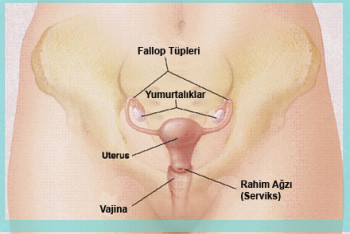
Making a statement on the occasion of February 4th Cancer Day, Gynecology and Obstetrics Specialist Op.Dr.Abdulaziz Akkaya said, “World Cancer DayEvery year, on the fourth day of February, under the leadership of UICC, members, partners and all over the world join forces to fight against the global cancer epidemic. “ he said.
Gynecology and Obstetrics Specialist Op.Dr.Abdulaziz Akkaya, “UICC,Cancer DayIt aims to prevent millions of preventable deaths by raising awareness and education about cancer. “It also calls on governments and individuals to take action against cancer.” he said.
What You Must Know About Women's Cancers
Underlining that the gynecological cancers seen in women are vulva, vagina, cervical, uterine and ovarian cancers, Op.Dr.Abdulaziz Akkaya said, "Among these, vulva and vagina cancers are rare."
Cervical Cancer
Cervical cancer is very rare before the age of 20, its rate gradually increases after this age and reaches its highest rate at the age of 50. It is seen at an earlier age than ovarian and uterine cancer.
It is the most common gynecological cancer in underdeveloped countries. The widespread and long-term use of the smear test, which is used for cervical cancer screening in developed countries, has reduced the rate of this disease.
Risk Factors
• Getting married at a young age
• Starting sexual life early
• Having many children
• Low socioeconomic level
• Having poor hygienic conditions
• Multiple partners or spouse having multiple partners
• Smoking
• The most important risk factor is having human papillomavirus (HPV) infection, which is a viral infection transmitted through sexual intercourse. This infection was detected in almost all (98%) of those with cervical cancer and the reason is these virus infections.
There are more than 100 types of HPV virus. HPV-6 and 11 types are responsible for 90% of genital warts that occur in the genital area. HPV types 16 and 18 are responsible for 70% of cervical cancers.
There are no early symptoms of cervical cancer. However, with regular smears, cancer can be detected at an early stage before it appears. Late symptoms include bloody discharge, bleeding during intercourse, and irregular menstrual bleeding.
The most important method for early diagnosis of cervical cancer is a smear test performed at least once a year. If there is a suspicious smear test, colposcopy and biopsy are performed. The most important method for protection is HPV vaccines. HPV vaccines have entered the routine vaccination program in developed countries. We recommend the use of HPV vaccines, which we have started to implement in our country. These vaccinations protect women from cervical cancer by 70%. Other methods of protection are being monogamous and using condoms in unsafe relationships.
While a small part of the cervix is removed in the form of a cone in the early stages of treatment, the area of surgery is expanded in the later stages. In some patients, radiation therapy and chemotherapy are required.
Uterine Cancer
It is a cancer that usually occurs after menopause. Although the average age of occurrence is 55 - 58, it can also be seen in some young women. It is common in women with diabetes, obesity and hypertension. It is the most common gynecological cancer in the USA after breast cancer.
Risk Factors
• Not having given birth
• High socioeconomic level
• Obesity and high blood pressure
• Cessation of menstruation after the age of 50 (average age of menstruation in Turkey is 47)
• Using hormones without doctor's control
• Having had breast, ovarian and colon cancer
• It is the presence of ovarian tumors that secrete hormones.
Symptoms of the disease are vaginal bleeding in a menopausal woman, and irregular bleeding and breakthrough bleeding in menstruating women. Uterine cancer is a cancer that can be diagnosed early due to its symptoms. 75% of patients are caught in the early stages.
The diagnosis of uterine cancer is made by taking a sample from the uterus. In early treatment, removal of the uterus is sufficient.
Ovarian Cancer
Ovarian cancer is also increasing in the world. A woman's risk of developing ovarian cancer throughout her life is 1 - 2%. There is genetic transmission in some types. These women should be followed closely by genetic research.
Risk Factors
• Not having given birth
• Early menstruation
• Late cessation of menstruation
• Having had breast and uterine cancer
• Having genetically inherited breast cancer in her family.
Using birth control pills for 2 years provides 50% protection against ovarian cancer, and use for 5 years provides 70% protection against ovarian cancer.
The disease does not show early symptoms, but when it does, the tumor is usually in an advanced stage. Symptoms are mostly gastrointestinal-related indigestion, abdominal bloating, nausea and weight loss.
The most important method of protection against ovarian cancer is gynecological examination and ultrasonography at regular intervals. For women who are found to be at risk, some blood tests (tumor markers) and ultrasonographic follow-up are important.
Breast Cancer
It is the most common cancer in women. 1 in 7 women will be diagnosed with this cancer in their lifetime.
Most Important Risk Factors
• Not having given birth to a child
• Don't be fat
• Consuming alcohol regularly
• Being infertile or receiving infertility treatment
• Consuming concentrated unnatural fiber-free foods
• Having a family history of breast cancer.
Breast cancer can occur at any age after the thirties. Women with a family history of breast cancer should be followed up at this age. For cancer screening, every woman should have a mammogram once at the age of 35, once every two years after the age of 40, and every year after the age of 50. With digital mammography, a new technique, image quality has increased and evaluation is made more objective. It is also used in breast MRI in selected cases.
The way to detect breast cancer early is to have regular breast examination and mammography. The most important examination is for the woman to examine herself in the post-menstrual period. If there is a palpable mass, a physician should be consulted.
Breast cancer diagnosis is made either by biopsy or by removal of the mass. With new surgical techniques, instead of the entire breast tissue, the lymph channels through which the cancer flows are detected and only the relevant parts of the breast are surgically removed.
As with all cancers, cancer prevention and early diagnosis are also important in gynecological cancers. Women should know their risks for cancer and the leading symptoms of cancer and should have gynecological examinations at regular intervals.
Comments and questions
There are no comments on this article yet.